
Destiny's Eric Osborne Explains How Feedback Informs Development
[This article was archived by the Internet Archive following the dissolution of GameFront. ]
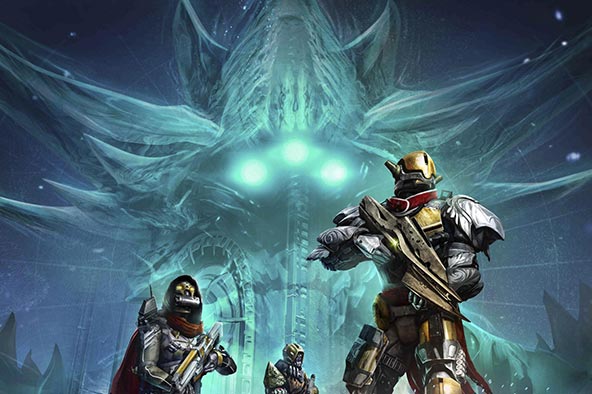
The Dark Below is the first expansion and 12th update for Destiny that aims to "expand the world of Destiny" with, among other changes, more gear, a new six-player raid, a fast-paced strike, and three new Crucible multiplayer maps.
As the first expansion for Destiny, The Dark Below, released on Dec. 9, represents the first step into the game's future. Yet, as a live experience, Destiny is constantly evolving. On a number of occasions, Bungie has responded either to player feedback or players' in-game actions to make big changes to how the game works.
Just how big of an effect does the Destiny community have on the further development of the game? GameFront contributor Morgan Ramsay turned to Eric Osborne, community and marketing relations manager at Bungie, for the answer.
Morgan Ramsay: Destiny has a large community. How much feedback does the game receive? What do you do with that information?
Eric Osborne: There's an unlimited amount of feedback coming in. We gather anecdotal feedback, bug reports, and feature requests from our forums, social, and digital. We were just in Las Vegas at the PlayStation Experience, where we had a ton of conversations, gathering personal feedback, too. We also have a user research team that gathers data about the experience, what players are doing in the game, which activities they're playing and for how long, and all that kind of fun stuff. They report that data to our designers, ask them questions, make hypotheses, and see if that data proves out.
It's a pretty complex, multifaceted process that involves a lot of teams. We have our community and user research teams but we also have our live support and sustain team, server infrastructure team, customer service team, and then, of course, our studio itself. We have a fairly large studio at more than 500 developers. We're all playing the game, injecting our own feedback into the mix. We knew Destiny was going to be a game that we would be updating and patching short- and long-term, so we built the game to sustain this type of activity.
Ramsay: What role do you play in that process as a community relations manager?
Osborne: Our job is to bring together all the feedback, the trends we're seeing in the community, what influencers are asking for, and what people are doing on our forums, and help the development team prioritize and figure out what we can and can't do for future patches and updates. We get in the room with the development team and make sure the community's voice is heard. That means we have to constantly keep in touch with all those people out there, not just on our forums but on Reddit, Twitter, Facebook, and all the various places we can have conversations with our community. We have to figure out what makes sense for us to bring to the development team.
Ramsay: Not all feedback is useful. How do you determine what recommendations to make?
Osborne: There are a number of factors. How many people would benefit from a feature or update? Is it feasible to build internally? How long will it take to get it out into the wild? Is it already something that's planned? The Bungie community has been a fundamental part of the process. For example, our customer service team looks at data from the game, how many people are getting specific errors, the volume of errors, the trend line for errors, and what people are saying about those errors; and then we point resources to where we can make the biggest impact.
Ramsay: Can you give me an example of how you addressed feedback in a big way that players would recognize?
Osborne: We saw player feedback about Engrams, their lack of satisfaction with the Cryptarch, and we saw that a certain class of players was spending an awful lot of time shooting into caves that had high volumes of enemy respawn.
The "Loot Cave" became a divining rod that told us players were dissatisfied with the quality and drop rate of Engrams, so the solution on our end was to slow the rate of enemy spawns in those caves, tweak the Cryptarch and Engram system to stop delivering lower-tier items, make Strikes pay out a little more regularly and consistently, and tweak planet materials, like Relic Iron and Spinmetal, to be useful for Crucible players as well.
That's the sort of update that took weeks to get out into the wild and in several stages. We saw player feedback on forums and social aligning perfectly with in-game behavior, so we were pretty certain that what people were saying was representative of a large number of players. We could make changes that would benefit a lot of people and make the game better.
Ramsay: Has player feedback reshaped the creative direction of Destiny? With so many voices, at what point do you draw the line and say, "There can be only one behind the wheel?"
Osborne: Destiny is a first-person shooter; it's not going to suddenly evolve into a strategy game. Destiny is a loot game; it requires investment. There are core pillars we adhere to and we posted those online. We designed the game to be social and cooperative. We designed the game to be a first-person action game. We designed the game to be fun when you're playing with your friends. Those are things that won't ever change.
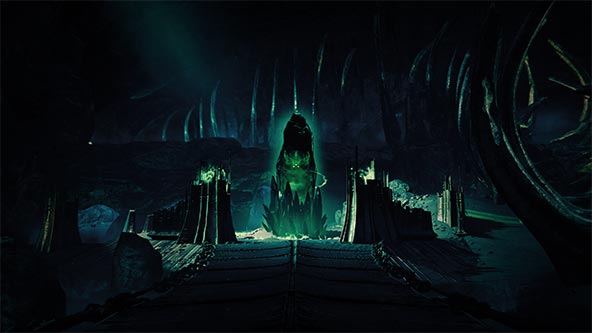
That is the core of Destiny, but we can look at the experiences players are having and say, "Oh, they want more weapon variety or better rewards." We can look at the raid and say, "A lot of people weren't satisfied with the way rewards were being doled out, so let's make them more consistent and predictable." Moving from the Vault of Glass to Crota's End, that's what we've done. The raid is still the raid with the same core goals. The raid is intended to be the most challenging thing we've created, to put six players to the test, and to require coordination. But we can change the way the rewards spool out.
Ramsay: Prior to Crota's End, the Vault of Glass was considered by some to be the best content in the game. Of the 10 million or so registered players, only two million have played the Vault of Glass. As endgame content, Crota's End is likely to be played by just as many. Is the fact that so few players have experienced Destiny's best content a problem?
Osborne: For players who are looking for a really rewarding but ultimately very challenging experience, the raid is the thing to do, but there are players who consider the Crucible their favorite activity and there are players who consider Strikes their favorite activity. Most players play a little bit of everything and then you have more specialized segments who really fit into one band or another. Iron Banner, for example, is the pinnacle content for somebody who really enjoys the Crucible, whereas the raid is the pinnacle content for someone who enjoys a super-deep PvE challenge. For players who are not looking to test their will and spirit, there's the strike, which is what my wife plays. The strike is a really fun and quick thing she can do while my son naps. She always gets rewards and feels great about the arcade action aspect.
Ramsay: One challenge of getting new players into the raid is gearing up those players. With randomized loot, whether players can gear up for the raid is down to probability. How can a casual player expect to gear up in time to play with their friends?
Osborne: We've heard that feedback pretty loud and clear. We've taken some steps already to make levels 26 to 30 more consistent.
We've added endgame gear to the Iron Banner, our competitive multiplayer "where power matters" event. We've made changes to requirements on Exotics so they don't take Ascendant Materials. A lot of players weren't spending Ascendants on Legendaries because they were stockpiling them, but they were limiting their movement through the levels, so we freed them up to be more generous about where they apply those on their other weapons. And we've added another path where you can spend Crucible Marks to get and exchange planetary materials if you're just doing competitive multiplayer.
We certainly don't want to take away the sense of accomplishment, and the rarity and power of that gear, but our goal is also to not make the game feel punitive and too grindy. That will also bear out in Crota's End. We've made adjustments to the loot tables and drops, so players will be getting that Raid gear more frequently, more consistently, and more predictably.
Ramsay: Entertainment time per dollar is an important consideration for many players. The Dark Below is priced at $20. That's one-third the price of a new game.
Osborne: When we look at the content on offer in Destiny, we're seeing millions of players come in every day and spend hours a day with that content. What we wanted to do is give them some fresh experiences. That means a new raid, which people will spend an insane amount of time with. It's a really complex, really fun aspect of the game, and one of the fresher experiences you can have in a first-person shooter.
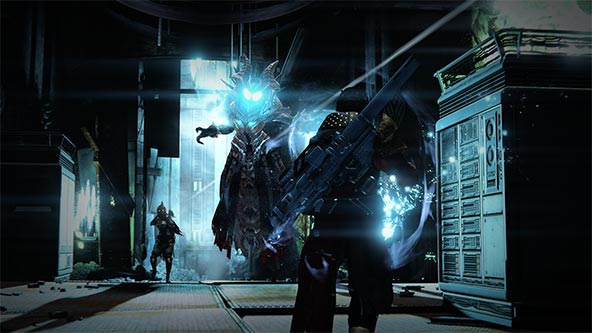
We saw players spend an awful lot of time in the Tower, visiting vendors, having dance parties, and trading in gear. We wanted to make sure that we could enrich that experience with not just a vendor but a character who was part of the story. We have three new Crucible multiplayer maps. We have the Will of Crota Strike, which I think is the best Strike we've produced to date and fairly different from the format we've used. The Will of Crota is a more frenetic back-against-the-wall Strike than we've ever produced before.
I think ultimately whether players believe The Dark Below is a good value is their call. When someone opens up their wallet, our job is to absolutely produce value for money. I think we've done that with The Dark Below.